I used to bully Harry Potter in school. With a glib psychology, a prose that was no more than cheaply dressed stage directions, and an undeserved cult – I thought Potter could be taken down a few notches. I thought I could confidently snub Pottermania until I was senile. Of course, I watched the movies, mawkish and pudding-full in Christmas-time, and allowed J.K. Rowling the Scrooge-ly penny of being an engaging story-teller. So, finally reading through the books without the envy of a failed writer, I think I will need a lot of butter to make my hat go down my throat.
Harry Potter lives. I have read prose stylists with immortal sentences who somehow still wrote dead stories. Martin Amis, my favourite taxidermist, could never get me to care much about Guy Clinch or Nicki, no matter the quality of the stuffing. Rowling, we have to admit, made us all taste butterbeer and imagine our destiny captive within a magical twig. Whatever literary function this is, it can’t take an easy talent.
When you stop asking it to pass the test as literature, or even as a novel, Harry Potter performs rather impressively. It’s something older than literature even – a hypnotizing fire-side story, an inhabitable universe, and saga of courage and friendship. J.K. Rowling probably made up her own standards, but she deserves all the O.W.Ls or N.E.W.Ts on the table.
What follows is a ranking of the books as self-contained pieces of entertainment. But the only way to enjoy Harry Potter is to read all seven years of Hogwarts, chronologically, and to consume them as a through-composed ensemble. It’s a great work to the extent that nothing is skippable, and all is re-readable with increasing returns.
The cover art featured is by the great Andrew Davidson, courtesy of the Bloomsbury 2018 adult edition. Mild spoilers ahead.
#7 – The Chamber of Secrets
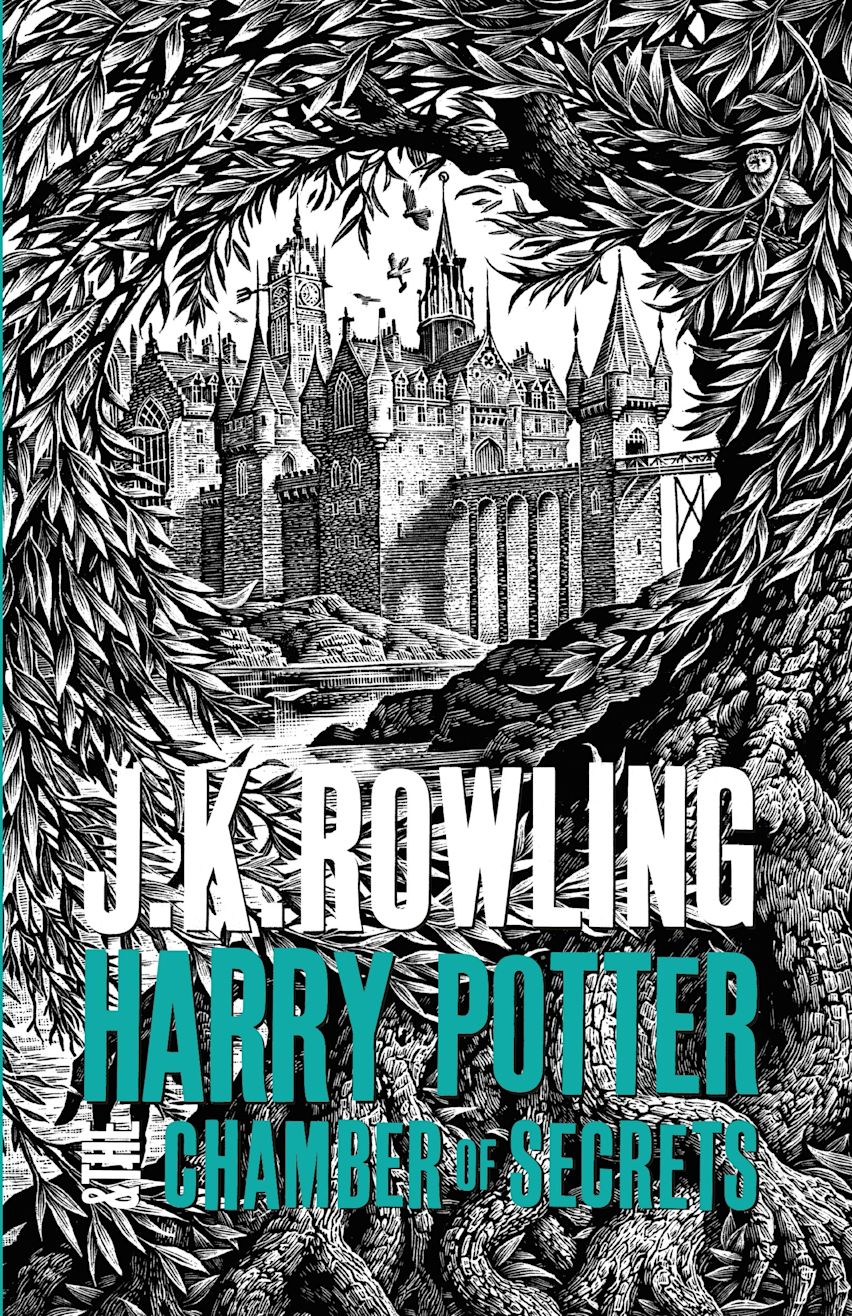
As a genre, the pre-teen fumble must have a negligible market. Even Rowling only wrote one of them, and this is that book. Book 1, with its toyish neatness, is pastiche of an earlier tradition. It only truly belongs to the twinkly daydreams of Lewis Carrol and Roald Dahl. And book 3 is where the messianic YA, which Rowling patented, gets going. In the meantime, we have the 12-year-old Harry, tonally and stylistically an orphan.
The story has the contours of noire. Lying bodies, whispered clues, and a cover-up by authorities – it’s all arranged. But the set happens to be overlit and someone is wearing pastel blue. That bit of comic colour, the grand incompetence of Gilderoy Lockhart, is always entertaining, and often plot-lubricant. Only his smarm can grease some of Rowling’s narrative gridlocks. No other adult in the story would have permitted Harry and Ron to be in the final act.
This is also where Rowling develops a serious habit for subplot. All the side-kicks have side-kicks. Trees have feelings. Even the ghosts have parties. Don’t mistake my enthusiasm for sarcasm – this is all welcome. I think Rowling is a writer who is hampered by economy. Consider this: for only about 20 pages more than its predecessor, book 2 gives us the real dark arts, Nazism and slavery. Nevertheless, Rowling hadn’t yet learnt to cope with her excesses. The pacing gives whiplash.
Even at the bottom of the pile, Rowling pulls off a difficult enough trick. In the villain’s final reveal, she delivers the juvenility of evil. Arendt should approve.
#6 – The Philosopher’s Stone
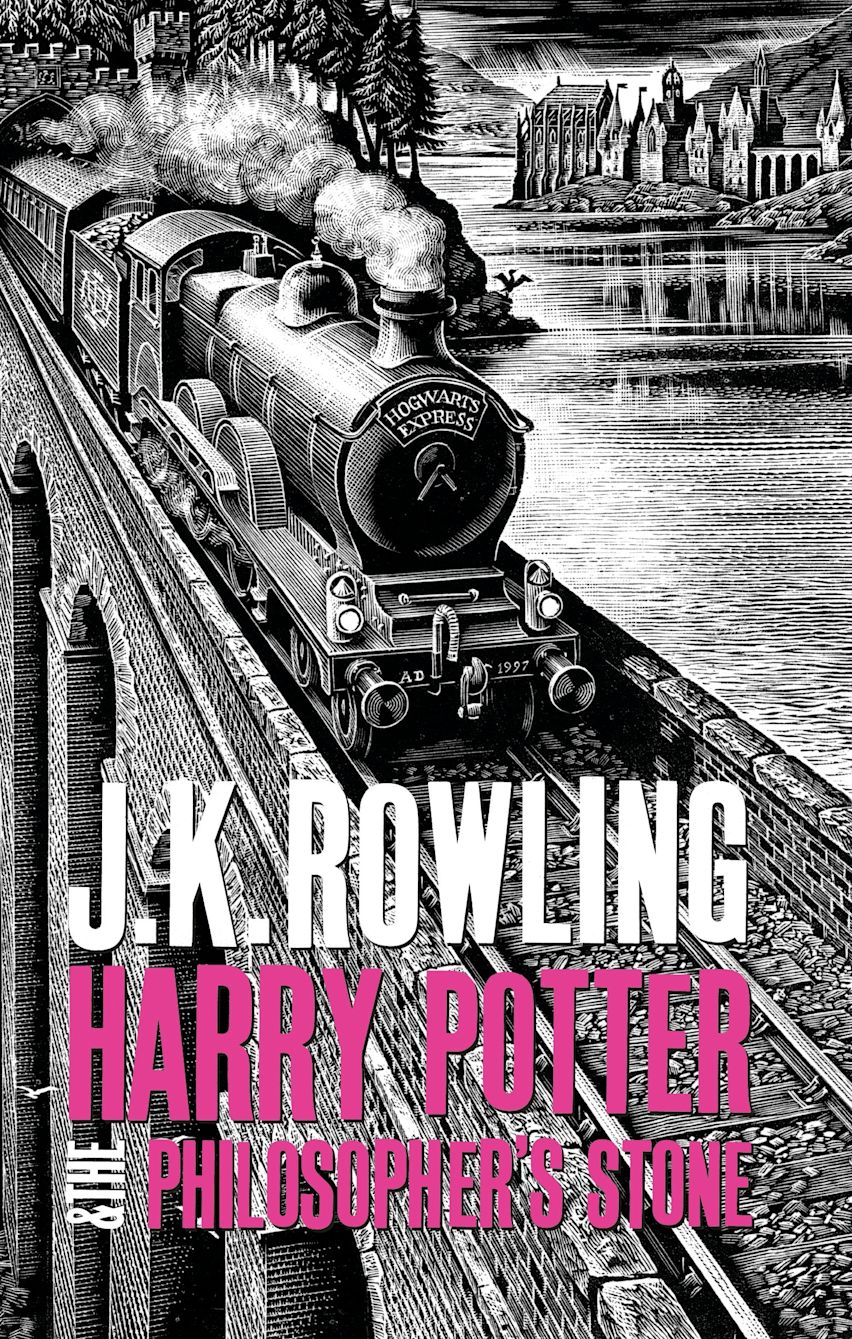
This is the only book where Rowling consciously practiced any kind of style. It is trying to be art at the sentence-level: catchy, nearly aphoristic, and re-readable. The debt to Roald Dahl shows in almost every line. The humour is more detached and wise. Some Rowling trademarks – the offhanded surprise joke – isn’t quite there. But the charm and whimsy glints from the first line. Everything that happens in the book, every cobblestone in Diagon Alley and every anecdote, is foundational to the series’ world-building. The base emotional layer of the saga is expertly established. We learn that muggles are really a metaphor for conformity. Dumbledore’s got a mystical plan, McGonagall a tight upper-lip, and Snape a grudge. And of course, what it feels like, at the tummy-level, to be the titular orphan who’s looking for love and belonging. Harry, you see, is a seeker.
The story has the lowest stakes out of the series. The plot hinges on the bizarre sequence of child negligence by all the adults in the book. The Philosopher’s Stone is the likeliest aid to Dark Lord’s return? OK. But, it doesn’t make sense to hide it inside a school full of hormonal truants. And do so behind a series of snakes-n-ladders grade obstacles. But I think the fact that this was meant as children’s book – a 11-year old’s adventure with a 11-year old’s problems – should be enough to excuse all such misgivings.
According to legend, Rowling architected her grand puzzle of interlocked sub-plots from the start. But reading the Philosopher’s Stone, you wouldn’t come away thinking it any more than a didactic fairy tale.
Overall, it’s fun adventure with a good twist, and – for a writer’s first published book – a work of confidence.
## – Prisoner of Azkaban

Leave a Reply